
Ask a question today, and there’s a good chance you’ll never click a single link to get the answer. Google’s AI Overviews summarize it at the top of the page. ChatGPT and Perplexity cite a handful of sources in a conversational reply. Siri and Alexa read one response aloud and move on. Your customers are searching differently, and the businesses that adapt will be the ones that get named.
That’s where answer engine optimization (AEO) comes in. Traditional SEO helps your website get found. AEO helps your content get selected, quoted, and recommended as the answer when AI-powered tools respond to a question. If your site isn’t built for that, your competitors’ sites will be the ones AI puts in front of your audience.
In this post, we’ll walk through five reasons AEO has become a necessity for your company’s website, from how search behavior is changing to how you can measure your results.

The Shift from Search Engines to Answer Engines
To understand why AEO matters, start with how people now get their answers. The search results page is no longer the finish line for most questions, and that changes what your website needs to do.
Answer engines are tools that respond to a question directly instead of handing back a list of links. Google’s AI Overviews, ChatGPT, Perplexity, Microsoft Copilot, and voice assistants like Siri and Alexa all work this way. They pull information from across the web, combine it, and deliver one clear response. Often the user never visits a website at all. This is the rise of the “zero-click” search, where the answer is the destination.
For businesses, this creates a new kind of risk: invisibility. You can rank well in traditional results and still be left out of the answer an AI gives. Answer engines only cite sources they can read, understand, and trust quickly. If your content is buried in vague copy, unstructured pages, or clever but unclear marketing language, the AI will skip it and cite a competitor whose content is easier to extract.
The upside is just as real. When an answer engine names your company as a source or recommendation, you gain visibility at the moment someone is ready to act. Getting there takes more than ranking well. It takes rethinking how your content is built, which is why it helps to see how AEO relates to the SEO work you may already be doing.
AEO and SEO Are Partners, Not Rivals
It’s easy to hear “AEO” and assume it replaces SEO. It doesn’t. The two work together, and treating them as competing strategies is one of the fastest ways to fall behind.
Answer engines still rely on the web’s existing foundations. They favor pages that load quickly, can be crawled without errors, and are backed by reputable links. A site with broken pages, slow performance, or a weak backlink profile will struggle to earn citations, no matter how well its answers are written. Solid technical SEO is the entry ticket. AEO is what turns that visibility into selection.
The two disciplines also reward similar habits. Keyword research reveals the questions your customers ask, and AEO helps you answer them in a form AI can lift and quote. Businesses that run both strategies together show up in traditional rankings and in AI-generated responses, which doubles the chances of being found. Once that foundation is in place, the next step is making your content easy for machines to read.
Structuring Content So AI Can Actually Understand It
Answer engines don’t read your website the way a person does. They scan for clear, well-organized information they can pull out with confidence, so how you structure a page matters as much as what it says.
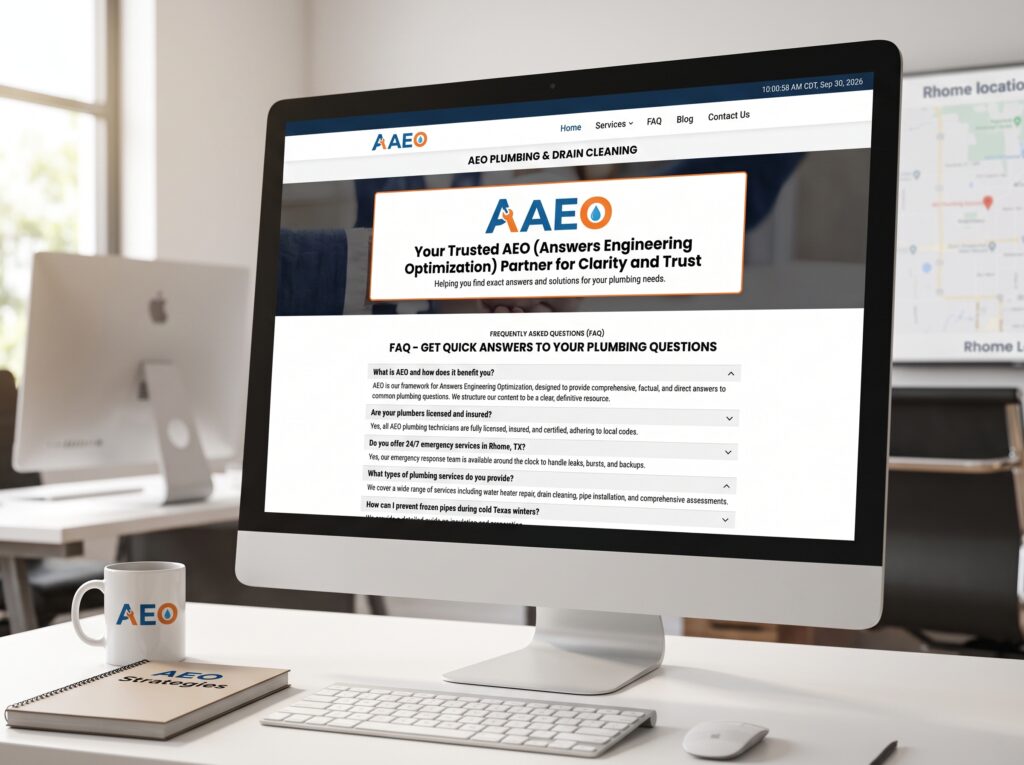
Start with direct answers. When a heading poses a question, answer it in the first one or two sentences, then add context below. Use descriptive headings, short paragraphs, and lists where they help. FAQ sections are especially effective because they mirror the way people phrase questions to AI tools. Each question and answer becomes a self-contained unit an engine can quote.
Behind the scenes, schema markup does the heavy lifting. This structured data tells machines exactly what your page contains, whether that’s an FAQ, a service, a business location, or an author. It removes guesswork and makes your content easier to interpret and cite. Structure gets your content understood, but understanding alone doesn’t earn a citation. The engine also has to trust you.
Building the Trust Signals AI Engines Look For
AI tools are cautious about what they recommend. Because a wrong answer reflects badly on them, they lean toward sources that demonstrate experience, expertise, authoritativeness, and trustworthiness, often summarized as E-E-A-T.
You build those signals in visible ways. Publish content written or reviewed by real experts, with clear author bios and credentials. Keep your business name, address, phone number, and service details consistent everywhere they appear online. Earn reviews and mentions from reputable third-party sites, since AI engines cross-reference multiple sources before they commit to an answer.
Content quality matters here too. Thin pages, recycled copy, and near-duplicate content spread across many URLs give AI little reason to treat your site as the definitive source. Original, specific, genuinely useful content stands out. Earning trust is an ongoing effort, and that makes it important to track whether your work is paying off.
Measuring AEO Success and Staying Ahead
Traditional metrics like rankings and organic clicks only tell part of the story now. If an AI answer mentions your company without sending a click, your analytics may never show it, even though your brand just gained exposure.
Track new indicators alongside the familiar ones. Monitor how often your brand or content is cited in AI Overviews, ChatGPT, and Perplexity by regularly testing the questions your customers ask. Watch for referral traffic from AI platforms in your analytics, and pay attention to growth in branded searches, which often signals rising awareness.
AI engines also change quickly, and so do the ways they choose sources. Businesses that build AEO habits now will hold an early-adopter advantage that becomes harder for late arrivals to close. Treat AEO as an ongoing practice of testing, refining, and updating rather than a one-time project.
Key Takeaways
Answer engines are changing how customers find and choose businesses, and your website needs to keep up. Here is what to remember:
- Search has shifted. Zero-click results and AI-generated answers mean ranking alone no longer guarantees visibility.
- AEO complements SEO. Strong technical SEO is the foundation that makes answer engine optimization work.
- Structure matters. Direct answers, clear headings, FAQ formatting, and schema markup make your content easy for AI to extract.
- Trust wins citations. Expertise, consistent business information, reviews, and original content signal that your site deserves to be quoted.
- Measurement is ongoing. Track AI citations, brand mentions, and AI referral traffic, and keep refining as the technology evolves.
The companies that act now will be the ones AI recommends tomorrow.
Ready to Make Your Website Answer-Ready?
Planify.agency helps businesses turn their websites into sources that both people and AI trust. Our team can audit your current content, identify gaps in structure and authority, and build an AEO strategy that works alongside your existing SEO. Contact Planify.agency today to schedule your website audit and start earning your place in the answers your customers are already reading.